March 2026

mental health

Childhood Trauma and the Journey of Adulting

Childhood Trauma and the Journey of Adulting Childhood experiences leave fingerprints on our hearts, minds, and bodies. When those experiences include trauma, the effects often follow us into adulthood, shaping how we think, feel, and act even when we aren’t consciously aware of it. Adulting is already challenging, but when you carry the echoes of your childhood, it can feel like climbing a mountain with a weight on your back. How Trauma Lives in Our Nervous System Childhood trauma isn’t just a memory; it’s a series of experiences that can wire your brain to expect danger, even in safe situations. This is why adults who experienced neglect, fear, or instability as children might find themselves: Hyper-aware of their surroundings, always scanning for threats Anxious in situations that others find calm or routine Prone to sudden emotional reactions that seem disproportionate to the moment Tasks that seem simple like asking for help, negotiating at work, or expressing emotions can trigger old survival responses. It’s not about being “broken.” It’s about having a nervous system trained to keep you safe in ways that no longer serve you. Recognizing this is the first step toward reclaiming control over your life. Adulting Feels Different When You’ve Been Hurt For many of us, growing up fast became a survival strategy. Adulting then isn’t just learning bills, careers, or relationships it’s managing an internal landscape shaped by fear, uncertainty, and self-doubt. You may struggle with: Trusting others or believing you genuinely deserve care Setting boundaries without overwhelming guilt or fear of abandonment Feeling worthy of love, success, and happiness Asking for help, even when you desperately need it Accepting compliments or believing positive feedback is sincere These struggles are not a reflection of weakness. They are echoes of experiences that asked you to grow up before you were ready. Relating Trauma to Everyday Life The impact of childhood trauma shows up in the little things, not just the obvious moments: A sudden fight with a friend may trigger disproportionate anxiety and fear of abandonment Rejection at work can feel like confirmation of long-held self-doubt and inadequacy Even joy can be uncomfortable because your nervous system doesn’t recognize safety Quiet moments may bring unease rather than peace, as silence once meant danger Healthy relationships might feel foreign or untrustworthy because they don’t match familiar patterns Adulting with trauma means learning to recognize these patterns and separating the past from the present. It’s about understanding that a current situation isn’t the same as the danger you once faced—even if your body and mind react as though it is. Rewriting Your Inner Story Healing doesn’t erase what happened—it rewrites the way you carry it. It involves: Self-compassion: Treating yourself as you would a child who needed care and protection. Speaking to yourself with kindness rather than criticism. Boundaries: Learning to protect your energy without guilt. Saying no without over-explaining. Choosing peace over people-pleasing. Support: Seeking therapy, mentorship, or safe communities to help navigate emotional terrain. You don’t have to heal alone. Patience: Allowing yourself to progress at your own pace, without judgment for setbacks. Acknowledgment: Naming what happened and validating that your responses made sense then—and still matter now. Adulting becomes less about perfection and more about resilience. It’s about noticing the old patterns, acknowledging them, and choosing differently when possible. Small Victories Matter Sometimes, adulting with trauma feels like one step forward, two steps back. But every small victory counts: Every boundary set, even when your voice trembled Every self-care ritual honored, even when you felt undeserving Every honest conversation about your feelings, even when vulnerability terrified you Every time you asked for help instead of suffering in silence Every moment you recognized a trigger and chose a different response Healing is incremental. Learning to live with your past while fully engaging in the present is a lifelong project, but it is one that can lead to freedom, self-awareness, and a deep sense of agency. Trauma Shapes, but Does Not Define You The most important truth is this: childhood trauma shapes parts of your story, but it does not define the entirety of your life. You are capable of: Love—both giving and receiving it fully Joy—even if it feels unfamiliar, it is still available to you Achievement—on your own terms, at your own pace Meaningful relationships—built on trust, authenticity, and mutual care Peace—not the absence of struggle, but the presence of self-acceptance Adulting with awareness means acknowledging the invisible weight you carry, but refusing to let it dictate your path. Every moment of conscious choice, every act of self-compassion, is a declaration that your past does not own your future.

Childhood Trauma and the Journey of Adulting Read Post »

mental health

Silence in Mental Health

Silence in Mental Health Mental health has long been shrouded in silence, a quiet that often speaks louder than words. Society’s tendency to avoid open conversations about mental health stems from fear, misunderstanding, and ingrained stereotypes. People struggling with depression, anxiety, or other psychological challenges are often labeled as “weak,” “crazy,” or “unstable,” creating a culture where seeking help is stigmatized. The Weight of Silence This silence has real consequences. Individuals may internalize their struggles, feeling isolated and ashamed. They may avoid seeking professional support or sharing their experiences, which can exacerbate symptoms and delay recovery. Families and communities, too, may unknowingly perpetuate this quiet by dismissing emotional distress or prioritizing physical health over mental wellbeing. The Chains of Stereotype Stereotypes around mental health further entrench this silence. The idea that mental illness is a personal flaw rather than a medical condition fosters judgment rather than empathy. Media portrayals often dramatize or sensationalize mental health issues, reinforcing misconceptions and fear. These societal narratives discourage honest dialogue, leaving those affected feeling invisible or misunderstood. The Cost of Misunderstanding The consequences of this stigma extend beyond the individual. Relationships fray under the weight of unspoken pain. Workplaces lose productivity when employees suffer in silence. Communities miss the opportunity to build genuine connection and support. The cost of misunderstanding mental health is not just personal—it is collective, eroding the very fabric of compassionate society. Finding a Voice Breaking this silence requires intentional awareness and empathy. It demands that communities normalize conversations about mental health, challenge stigmatizing stereotypes, and provide safe spaces for individuals to express their struggles without fear of judgment. Small acts of listening without fixing, of acknowledging without dismissing, can begin to dissolve the isolation that silence creates. A Call for Understanding Only by speaking openly can we replace fear with understanding, silence with support, and stigma with hope. Mental health is not a weakness to be hidden but a dimension of humanity to be honored. When we create space for these conversations, we do more than help individuals heal—we build a world where vulnerability is met with compassion, and where no one suffers alone in the quiet. The silence in mental health must be broken, and it begins with each of us daring to listen, to speak, and to care.

Silence in Mental Health Read Post »

Loss & Grief

When Dreams End Before They Begin: The Silent Grief of Fathers

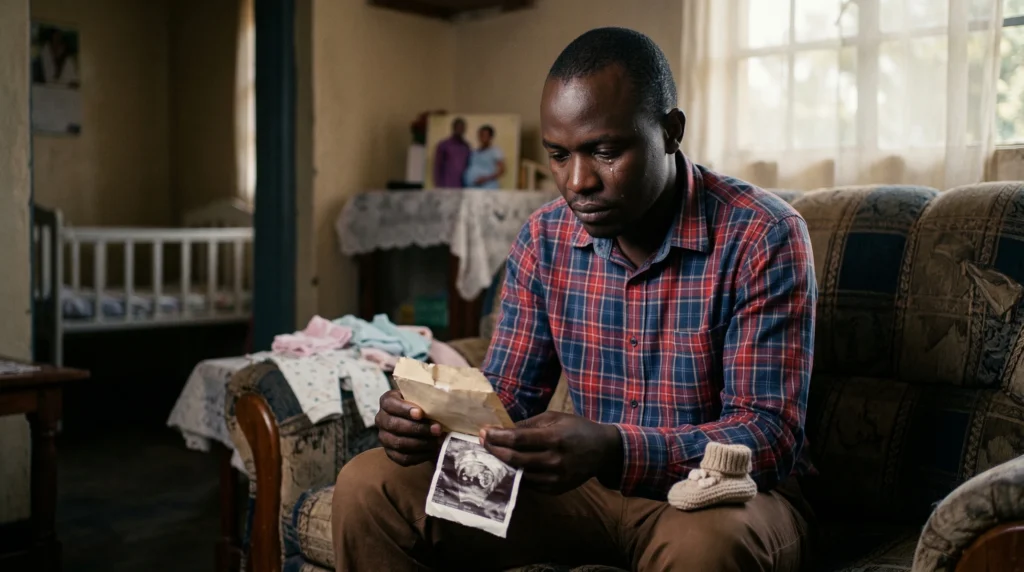
MKIUGYFD The loss of a child at birth is a heartbreak that touches every corner of a family, yet one story is rarely told: the story of fathers. While mothers’ grief is often visible, fathers endure a silent, private sorrow that carries its own weight a mix of fear, responsibility, and heartbreak that is seldom acknowledged. Their journey is often quiet, invisible, but no less profound. The Fear That Lingers From the earliest moments of pregnancy, fathers can feel a constant undercurrent of fear. They worry for the child’s health, for the mother’s safety, and in the worst-case scenarios, fear the unimaginable losing both. Each contraction, each hospital visit, can feel like standing on the edge of a precipice, anticipating disaster. Yet, in a world that expects men to remain strong, these fears are often hidden behind calm expressions and steady hands. Many fathers carry the anxiety silently, believing that sharing it might only worsen the situation or add to their partner’s burden. The Weight of Responsibility Grief for fathers is often accompanied by an immense sense of responsibility. They are expected to provide emotional support to their partner, manage logistical and financial concerns, and maintain a semblance of normalcy for family and society. In trying to hold everything together, fathers often suppress their own pain, pushing it aside to focus on the needs of others. This balancing act between their private heartbreak and outward composure can be exhausting, leaving them emotionally drained and lonely, even in the presence of others. The Invisible Grief Unlike mothers, fathers’ grief is rarely recognized. Society often overlooks the depth of their sorrow, expecting them to “stay strong” and “be the rock.” Yet inside, fathers may wrestle with sadness, guilt, anger, and helplessness. They question whether they could have done more, if they could have prevented the loss, and struggle with feelings of inadequacy. The result is a profound, invisible suffering that can intensify feelings of isolation, as their grief is neither openly expressed nor socially validated. Coping in Silence Fathers find ways to cope, often in solitude. Some immerse themselves in work or practical responsibilities, channeling their emotions into action. Others create personal rituals like planting a tree, writing letters to their child, or setting aside private moments of remembrance. Seeking advice from peers who have experienced similar losses can help, as can professional counseling or support groups, though these are less frequently accessed by fathers. In many cases, coping is a private journey, a quiet endurance that allows them to carry both their grief and the family forward. The Need for Recognition Fathers’ grief deserves acknowledgment. Their pain is real, layered, and profound, yet it is often ignored or minimized. Recognizing and validating fathers’ experiences allows them to process their loss, express their emotions safely, and begin healing. When families, healthcare providers, and society create space for fathers to grieve, it not only honors their sorrow but strengthens the support system for the entire family. Fathers do grieve, deeply and silently, and their heartbreak deserves to be seen, held, and understood.

When Dreams End Before They Begin: The Silent Grief of Fathers Read Post »